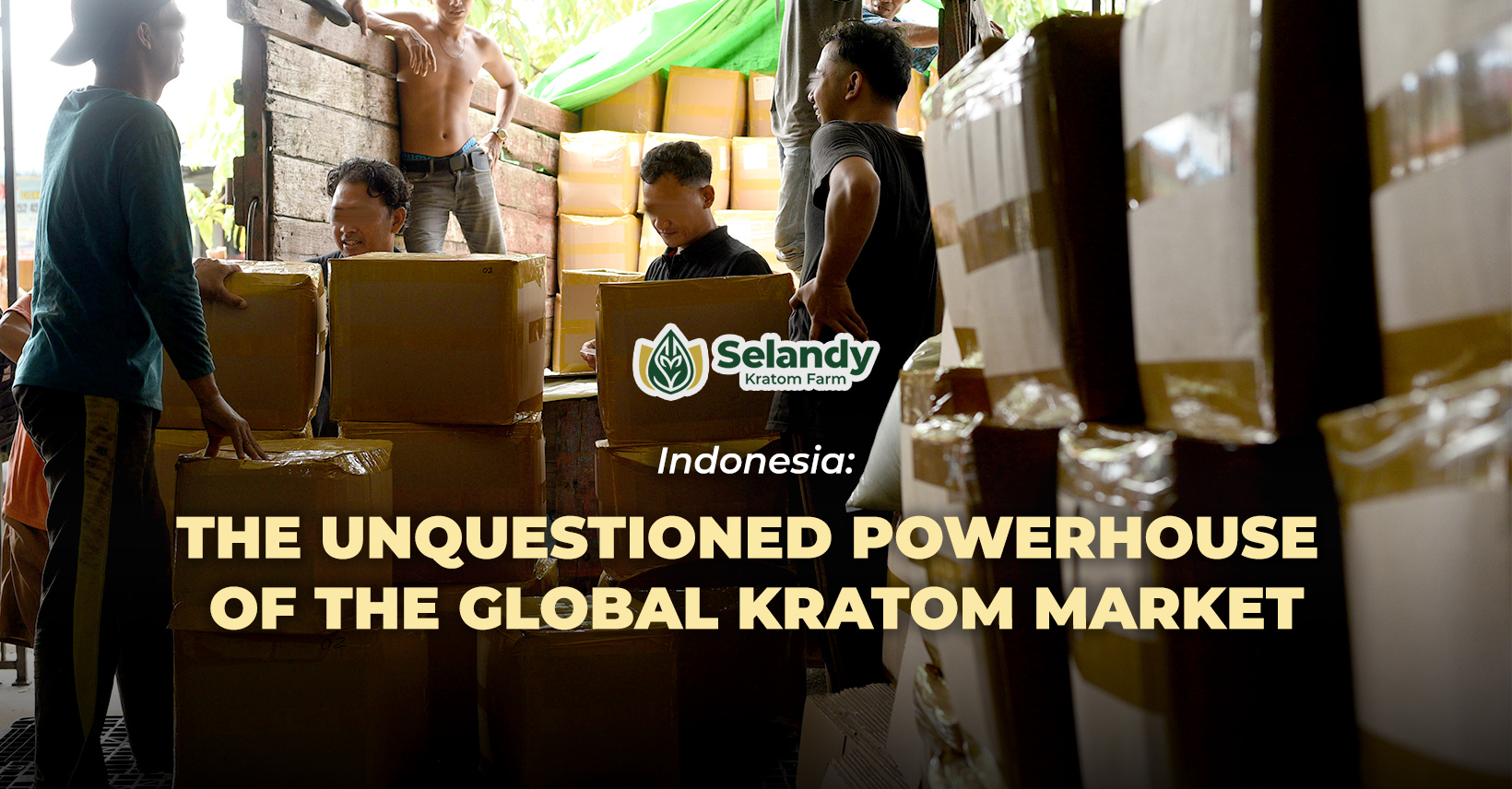
Indonesia, an archipelago nation renowned for its rich biodiversity and natural resources, has emerged as the undisputed leader in the global kratom market. As the primary producer and exporter of Mitragyna speciosa, commonly known as kratom, the country plays a pivotal role in supplying this increasingly sought-after botanical to consumers worldwide. With new governmental regulations coming into effect in 2025, Indonesia is not only solidifying its position but also shaping the future landscape of the international kratom trade.
The Rise of a Botanical Giant: Indonesia’s Dominance in Kratom Production
For decades, indigenous communities across Southeast Asia have utilized kratom for its traditional medicinal properties and as a natural stimulant. However, it is Indonesia, particularly its vast Borneo island (Kalimantan), that has become the epicenter of commercial kratom cultivation and export. The lush, tropical rainforests and ideal climatic conditions provide a perfect habitat for the Mitragyna speciosa tree to thrive, allowing for large-scale harvesting that is unparalleled globally.
The sheer volume of kratom originating from Indonesia is staggering. Farmers, many of whom have cultivated kratom for generations, rely on it as a crucial source of income. This widespread cultivation, combined with efficient supply chains that extend from remote villages to international ports, has cemented Indonesia’s status as the world’s largest kratom supplier.
Navigating the Export Landscape: Indonesia’s Evolving Regulations in 2025
The global kratom market is complex, characterized by varying legal statuses in importing countries and a need for greater standardization. Recognizing its key position and the growing international demand, the Indonesian government has taken proactive steps to regulate the kratom trade. As of 2025, significant new regulations have been introduced to streamline and formalize the export process.
Specifically, the Ministry of Trade (Kementerian Perdagangan) has issued a series of crucial ministerial regulations designed to govern the handling, utilization, and export of kratom. These include:
- Minister of Trade Regulation No. 20 of 2024:
This regulation likely laid the initial groundwork for the overall management and utilization framework of kratom within Indonesia, setting the stage for more specific export rules. - Minister of Trade Regulation No. 21 of 2025:
This regulation, alongside its predecessor, is instrumental in defining the specific procedures and requirements for exporting kratom, aiming to ensure quality control, transparency, and compliance with international standards. - Minister of Trade Regulation No. 9 of 2025:
While specific details would require direct access to the full text, this regulation likely complements the others, potentially addressing aspects such as licensing, phytosanitary requirements, or export quotas.
These new regulations, coming into effect during 2025 (and active as of June 20, 2025), signify a concerted effort by the Indonesian government to legitimize and professionalize the kratom industry. For years, the industry has operated with a degree of informality, leading to inconsistencies in product quality and challenges in international trade. The new framework aims to mitigate these issues, offering greater assurance to importing nations and fostering sustainable growth for Indonesian farmers and exporters.
Why Regulation Matters: Enhancing Quality and Global Trust
The implementation of stricter export regulations by Indonesia is a critical development for several reasons:
- Quality Control and Standardization:
By setting clear guidelines for processing, handling, and export, the Indonesian government can enforce higher quality standards. This is vital for a product like kratom, where consistency in alkaloid content and purity is paramount for consumer safety and desired effects. Regulated processes can minimize contaminants, adulteration, and mislabeling. - Increased Transparency:
Formal regulations enhance transparency throughout the supply chain. This allows importing countries and consumers to have greater confidence in the product’s origin, processing methods, and ethical sourcing. - Facilitating International Trade:
A clear regulatory framework reduces ambiguities and potential friction with importing countries. It can help overcome barriers in nations with evolving or ambiguous kratom laws, potentially opening new markets and solidifying existing trade relationships. - Protecting Domestic Industry:
By formalizing the export process, the government helps protect Indonesian kratom farmers and businesses. It can ensure fair trade practices, prevent exploitation, and provide a stable economic environment for thousands of livelihoods dependent on kratom cultivation. - Addressing Global Concerns:
The varying legal status of kratom worldwide often stems from concerns about safety and a lack of regulation. By proactively implementing comprehensive export rules, Indonesia demonstrates its commitment to responsible trade, which can positively influence global perceptions and regulatory discussions.
The Global Reach: Major Importers of Indonesian Kratom
Indonesia’s kratom exports primarily target markets where the substance is legal or exists within a “gray area.” The United States and Europe are consistently the largest importers of Indonesian kratom.
- United States:
Despite ongoing debates about its classification at the federal level and varying state laws, the US remains the largest consumer market for kratom. Indonesian suppliers meet a significant portion of this demand. - Europe:
While some European countries have banned kratom (e.g., Sweden, Denmark), others like the Netherlands, Spain, and the Czech Republic maintain more permissive stances, creating viable markets for Indonesian exports. The regulatory efforts by Indonesia aim to provide greater certainty for these European importers.
The vast majority of kratom available globally, whether in powder, extract, or capsule form, can trace its origins back to Indonesian soil. This makes Indonesia’s regulatory shifts highly impactful on the international supply chain.
Challenges and the Road Ahead for Indonesia’s Kratom Industry
Despite its dominant position and recent regulatory strides, Indonesia’s kratom industry faces several challenges:
- Global Legal Uncertainty:
The inconsistent legal status of kratom worldwide remains the most significant hurdle. Bans in key potential markets and ongoing debates in others create volatility for exporters. Indonesia’s efforts to regulate exports are a step towards mitigating this, but ultimately, global recognition and consistent legal frameworks are needed. - Sustainability and Environmental Impact:
Large-scale cultivation, especially in rainforest regions, raises questions about environmental sustainability and potential deforestation. Responsible harvesting practices and sustainable farming initiatives will be crucial for the long-term viability of the industry. - Quality Assurance Beyond Borders:
While Indonesia can regulate exports, ensuring consistent quality and preventing adulteration once the product reaches importing countries remains a challenge. Collaboration with international regulatory bodies and industry associations is essential. - Scientific Validation:
The lack of widespread, large-scale clinical trials on kratom’s safety and efficacy, particularly in Western medicine, contributes to regulatory hesitancy globally. Indonesia, as the primary producer, could play a vital role in supporting and facilitating such research. BRIN’s ongoing research into kratom’s pharmacological properties and potential health benefits is a promising development in this regard.

Conclusion: Indonesia’s Enduring Influence on the Kratom World
Indonesia’s role as the world’s largest kratom producer and exporter is undeniable. The country’s abundant natural resources, combined with generations of cultivation expertise, have made it the backbone of the global kratom supply chain. The recent implementation of Minister of Trade Regulations No. 20 of 2024, No. 21 of 2025, and No. 9 of 2025 marks a pivotal moment, signaling Indonesia’s commitment to formalizing and professionalizing its kratom export industry.
These regulatory efforts are poised to enhance product quality, increase transparency, and facilitate smoother international trade, ultimately benefiting both Indonesian farmers and global consumers. While challenges remain, particularly concerning the varying legal status of kratom worldwide and the need for further scientific validation, Indonesia’s proactive stance positions it not just as a supplier, but as a key player actively shaping the future of this complex and fascinating botanical market. The world watches as Indonesia leads the way in bringing order and sustainability to the rapidly expanding kratom industry.