Indonesia, the undisputed global leader in kratom (Mitragyna speciosa) production and export, is embarking on a pivotal transformation of its industry. With new regulations spearheaded by the Ministry of Trade in 2025, the nation is shifting its focus from mere volume to stringent quality control and strategic downstreaming. These proactive measures are designed not only to minimize export rejections but also to significantly enhance the value and reputation of Indonesian kratom on the international stage.
Why Quality Matters: Addressing Global Rejections and Building Trust
For years, Indonesia’s booming kratom industry, while economically vital, faced challenges related to inconsistent product quality. Shipments were occasionally rejected by importing countries due to various issues, ranging from contamination to improper processing. Such rejections incur substantial financial losses for exporters and can severely damage the reputation of Indonesian kratom.
Recognizing this critical pain point, the Indonesian government, through its newly implemented regulations (such as Minister of Trade Regulation No. 20 of 2024 and No. 21 of 2025, alongside No. 9 of 2025, which are all active as of June 20, 2025), is placing an unprecedented emphasis on quality assurance. These rules are a direct response to the need for Indonesian kratom to consistently meet the demanding standards of international markets. The goal is clear: to ensure that every batch of kratom exported from Indonesia reflects the highest possible standards, thereby reducing rejections and building enduring trust with global buyers.

The New Gold Standard: Permitted Forms and Stringent Processing
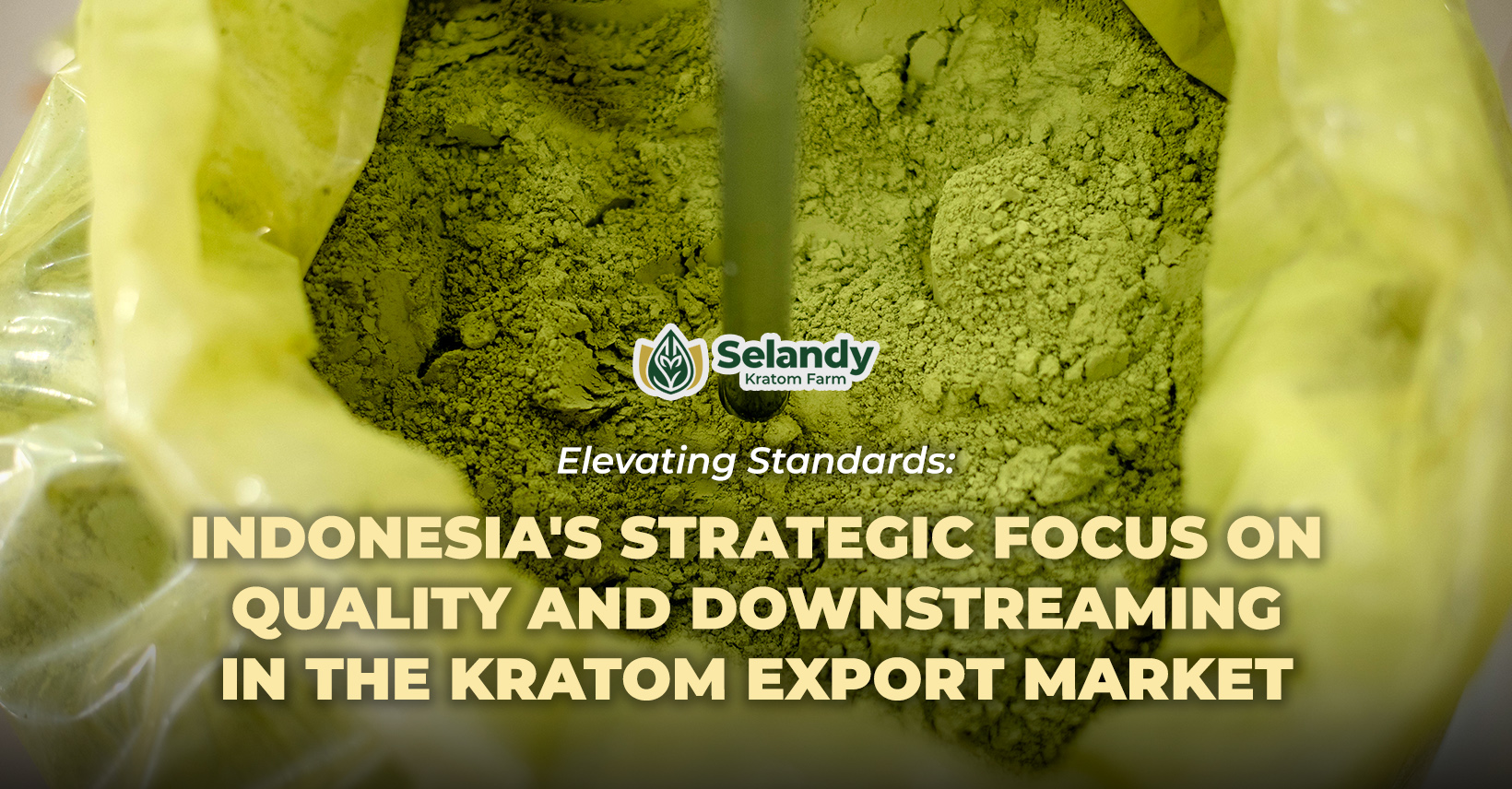
The updated regulations are remarkably specific about the forms in which kratom can be exported, reflecting a deliberate move towards value-added processing and enhanced safety. Under these new rules, kratom export is explicitly permitted only in two forms: crushed leaf (remahan) and powder. Furthermore, the powder must adhere to a strict granulometry standard: less than 600 microns.
This precise size requirement is crucial for several reasons:
- Purity and Consistency:
Finer powder typically indicates a more uniform product, reducing the likelihood of inconsistencies in alkaloid distribution and ensuring a smoother consumer experience. - Safety:
A controlled particle size can help prevent the presence of larger, potentially harmful foreign materials.
Beyond the physical form, the regulations mandate two critical processing steps:
- Irradiation:
All exported kratom must undergo an irradiation process. This is a powerful sterilization technique that uses ionizing radiation to significantly reduce microbial load, including bacteria, mold, and other pathogens. This step is vital for improving product safety and extending shelf life, making Indonesian kratom more appealing to markets with strict food safety regulations. - Sorting and Quality Control:
The material must pass a stringent sorting process. This indicates a multi-stage quality control mechanism designed to remove impurities, ensure consistency, and verify that the product meets the specified quality parameters before it leaves Indonesian shores.
These requirements collectively demonstrate the government’s proactive efforts to enhance the added value of kratom and to guarantee product standards that align with international expectations. This is a significant leap from previous, less regulated practices, positioning Indonesia as a responsible and quality-focused supplier.
Downstreaming: Beyond Raw Materials to Value-Added Products
The focus on specific forms (crushed and powdered) and advanced processing techniques like irradiation is a clear indicator of Indonesia’s strategic push towards downstreaming in the kratom industry. Downstreaming involves transforming raw materials into higher-value, more refined products.
Historically, Indonesia primarily exported raw, unprocessed kratom leaves. While profitable, this limited the country’s economic benefit to simply being a raw material provider. By mandating processing into powder and crushed forms, and requiring additional steps like irradiation, the government is effectively encouraging Indonesian businesses to:
- Invest in Processing Infrastructure:
This creates demand for local processing facilities, equipment, and skilled labor. - Capture More Value:
Instead of just selling raw leaves, Indonesian companies can now sell processed products that command higher prices on the international market, thereby retaining more of the value chain within the country. - Meet Global Consumer Preferences:
Many international consumers prefer kratom in powder form for ease of use, dosage control, and integration into various products. - Enhance Product Safety Profile:
The mandated irradiation and sorting significantly improve the safety profile, making the product more acceptable to health-conscious markets and regulators.
This strategic shift away from purely raw material export towards processed, quality-controlled products is a common trajectory for commodity-producing nations seeking to maximize their economic returns and establish a more sophisticated industrial base.
The Broader Impact: Boosting Reputation and Expanding Markets
The implications of these new regulations extend far beyond mere compliance. They are set to fundamentally transform the perception and reach of Indonesian kratom:
- Elevated Reputation:
By consistently delivering high-quality, safe, and standardized products, Indonesia can significantly elevate the global reputation of its kratom. This helps distinguish legitimate Indonesian kratom from potentially inferior products from other sources or unregulated segments of the market. - Reduced Trade Barriers:
Countries with stricter import regulations might become more amenable to accepting Indonesian kratom once they see concrete evidence of rigorous quality control and safety measures, potentially opening up new markets or increasing volumes in existing ones. - Sustainable Growth:
A well-regulated industry is more sustainable in the long run. It encourages responsible farming, fair labor practices, and adherence to environmental standards, contributing to the industry’s longevity. - Support for Scientific Validation:
While regulations don’t equate to medical approval, a higher standard of product quality and consistency can provide better material for scientific research. This could eventually contribute to a deeper understanding of kratom’s properties and potentially influence its legal status in other countries. BRIN’s ongoing research into kratom’s pharmacological properties and its potential therapeutic uses, including for diabetes and as an analgesic, complements these efforts by building a scientific foundation for the plant’s benefits.
Challenges Ahead: Implementation and Global Acceptance
Despite the positive intent behind these regulations, the Indonesian kratom industry will likely face challenges during implementation:
- Compliance for Small Farmers/Exporters:
Ensuring that all producers, especially smaller ones, can meet the new processing and quality standards (e.g., access to irradiation facilities) will require significant investment and support. - Enforcement:
Effective enforcement of these new rules across a vast and often remote production landscape will be crucial to their success. - Global Harmonization:
While Indonesia is doing its part, the varying legal status of kratom in importing countries remains a significant hurdle. Indonesia’s efforts may encourage more lenient regulations abroad, but this is not guaranteed. - Market Adaptation:
Importers and consumers globally will need to adapt to the new standards, and there might be initial price adjustments due to increased processing costs.

Conclusion: Indonesia’s Vision for a Responsible and High-Value Kratom Future
Indonesia’s strategic pivot towards quality and downstreaming in its kratom export industry marks a transformative moment. Through stringent regulations on product form, particle size, and mandatory processes like irradiation and rigorous sorting, the Indonesian government is demonstrating a strong commitment to enhancing the value, safety, and global acceptance of its kratom.
As of mid-2025, these new rules are actively shaping the trade, aiming to minimize rejections and foster greater trust with international buyers. This proactive approach not only elevates Indonesia’s reputation as a responsible supplier but also ensures that its vast kratom resources contribute more significantly to the national economy through value-added production. While challenges in global acceptance and full implementation remain, Indonesia is firmly setting the gold standard for kratom exports, paving the way for a more stable, sustainable, and high-quality future for this remarkable botanical.