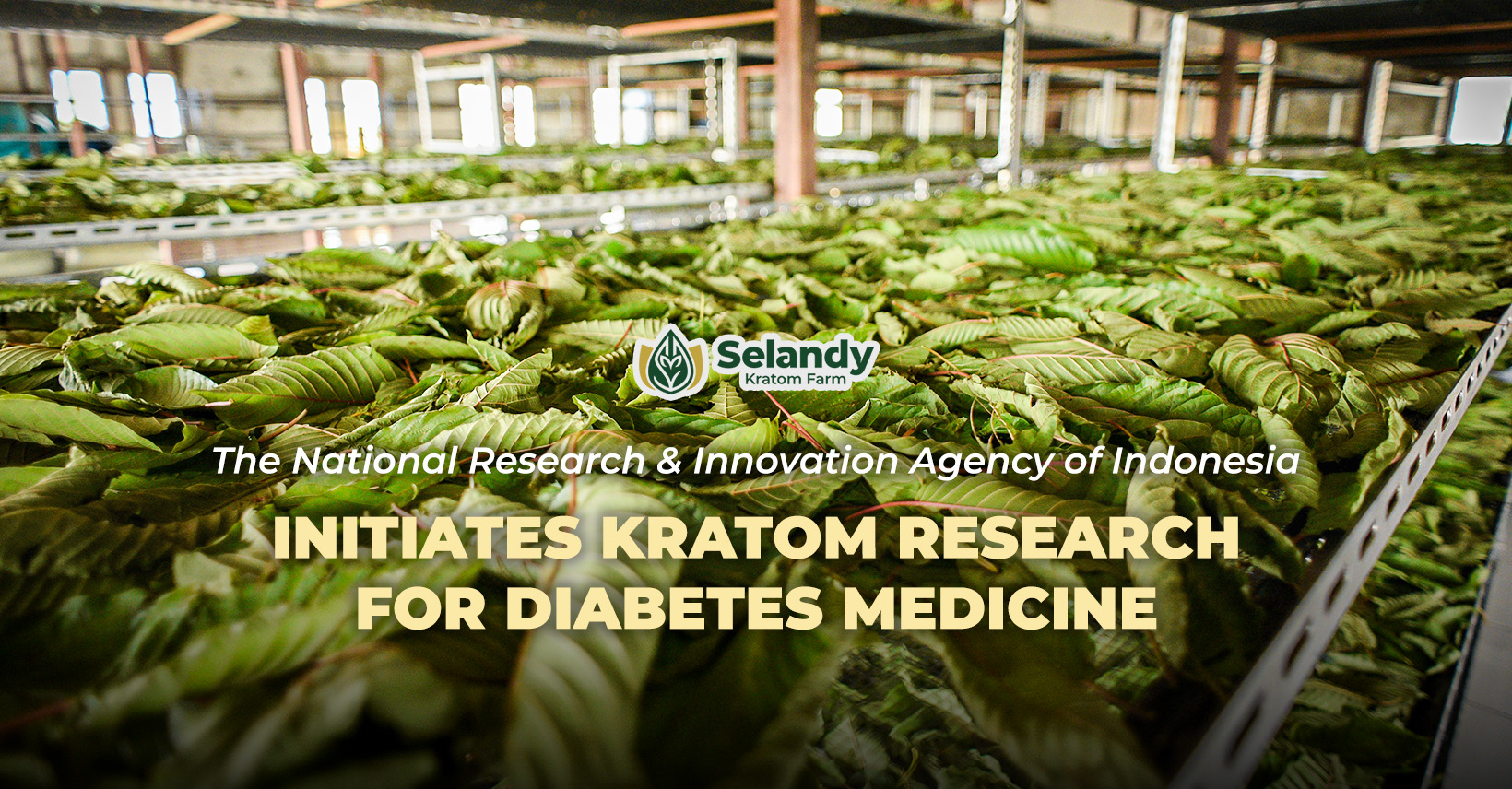
The fascinating world of kratom (Mitragyna speciosa) continues to generate significant discussion, fueled by claims of its health benefits and the ongoing scientific exploration surrounding this Southeast Asian botanical native to Indonesia. The National Research and Innovation Agency (BRIN) of Indonesia is at the forefront of this investigation, initiating comprehensive research into kratom’s traditional uses and its pharmacological activities.
BRIN’s Deep Dive: Unveiling Kratom’s Scientific Secrets
Initial findings from BRIN’s research have revealed that kratom exhibits dual anti-inflammatory properties within its alkaloids and extracts, which also demonstrate analgesic effects. Regarding the crucial aspects of safety and potential for addiction, the World Health Organization (WHO) is currently undertaking further research and assessment of kratom’s addictive properties.
“Currently, we are in the process of testing kratom for diabetes treatment through in vivo and in vitro studies. Empirically, we have also obtained data from several individuals in Kalimantan with a history of diabetes who consume kratom, and their glucose levels reportedly decreased, with their condition improving compared to before kratom consumption,”
These insights were shared during BRIN Insight Every Friday (BRIEF) edition 133, themed “Kratom: Traditional Uses vs Modern Applications,” on Friday, September 20th.
The leaves of kratom have become a hot topic due to both the purported health benefits and the accompanying controversies. This plant, originating from Southeast Asia, including Indonesia, has a long history of traditional medicinal use. Recognizing its significance, the Indonesian Government, through the Ministry of Trade, has officially regulated the handling, utilization, and trade of kratom, as outlined in the Minister of Trade Regulation Number 20 of 2024.
“Kratom, or Mitragyna speciosa, is an endemic plant in Southeast Asia, primarily found in Malaysia and Indonesia, with its habitat predominantly in Kalimantan, and also present in some areas of Thailand. Generally, kratom is exported to America and Europe,” Masteria stated.
Kratom belongs to the Rubiaceae family, the same family as coffee. Its local names include purik and ketum in West Kalimantan, and kedamba or kedemba in East Kalimantan. This plant presents with several leaf types, notably kratom with green-veined and red-veined leaves.
Masteria further elaborated on traditional kratom use, explaining that the dried leaves are consumed directly or steeped in hot water and drunk as tea. “Kratom is believed to treat intestinal infections, muscle pain, coughs, diarrhea, and can also boost energy and mood. In the 19th century, in Malaysia and Thailand, opium addicts used kratom to manage their addiction,” she revealed.

A Century of Research: From Isolation to Ongoing Debate
In 1921, the first kratom compound was isolated by Hooper, marking the beginning of research that has spanned over a century and continues to spark debate today. A paper published in the Journal of The Chemical Society Transactions in 1921 noted that Ellen Field isolated the compounds mitragynine and mitraversine from Mitragyna speciosa. She indicated that kratom was used medicinally for opium addiction and as a local anesthetic.
“There are at least 40 types of alkaloid compounds in kratom leaves, with the five main compounds being mitragynine, paynantheine, speciogynine, 7-hydroxymitragynine, and speciocilatine, with varying compound content across different regions, ranging from 50 to 70%. The most extensively studied compounds regarding their analgesic and addictive properties are mitragynine and 7-hydroxymitragynine. These two compounds are also being individually researched for their potential as analgesics, anti-inflammatories, and for cancer treatment,” she detailed.
In 2021, the WHO Expert Committee on Drug Dependence (ECDD) conducted a pre-review of kratom’s health impacts. They concluded that there was insufficient evidence to proceed to a critical review stage but recommended continued surveillance by the WHO.
“The kratom research conducted at BRIN’s Vaccine and Drug Research Center to date includes the standardization of alkaloid extracts, in vitro studies comprising antioxidant activity in cells, dual anti-inflammatory activity, and its potential as an adjuvant for cancer therapy, as well as in vivo studies covering analgesic activity, withdrawal effects, and acute oral toxicity tests,” she explained.

BRIN’s Findings: Antioxidant, Anti-Inflammatory, and Analgesic Potential
According to Masteria, kratom extracts possess antioxidant properties capable of protecting cells from free radicals such as reactive oxygen species (ROS) and nitric oxide. Both crude kratom extracts and alkaloids exhibit anti-inflammatory activity through their potential to inhibit the non-steroidal anti-inflammatory drug (NSAID) targets COX-2 and 5-LOX, with potentially fewer side effects, and could be used as an adjuvant in cancer therapy.
“Kratom extracts have shown analgesic effects in both in vitro and in vivo studies. Our in vivo studies indicate that at certain doses, kratom alkaloids have an analgesic effect twice as high as that of crude extracts,” Masteria stated.
Furthermore, Masteria added that chronic administration of kratom alkaloids at increasing doses induced fewer withdrawal symptoms compared to the morphine group. “Additionally, kratom alkaloids, when used to treat the morphine-treated group, tended to reduce withdrawal symptoms,” she concluded.
This research from BRIN sheds light on the multifaceted potential of kratom, highlighting its traditional uses and exploring its pharmacological activities, paving the way for a deeper understanding of this intriguing plant.
This article has been translated from the original Indonesian version.
Source:
https://www.brin.go.id/news/120739/brin-inisiasi-riset-kratom-untuk-obat-diabetes