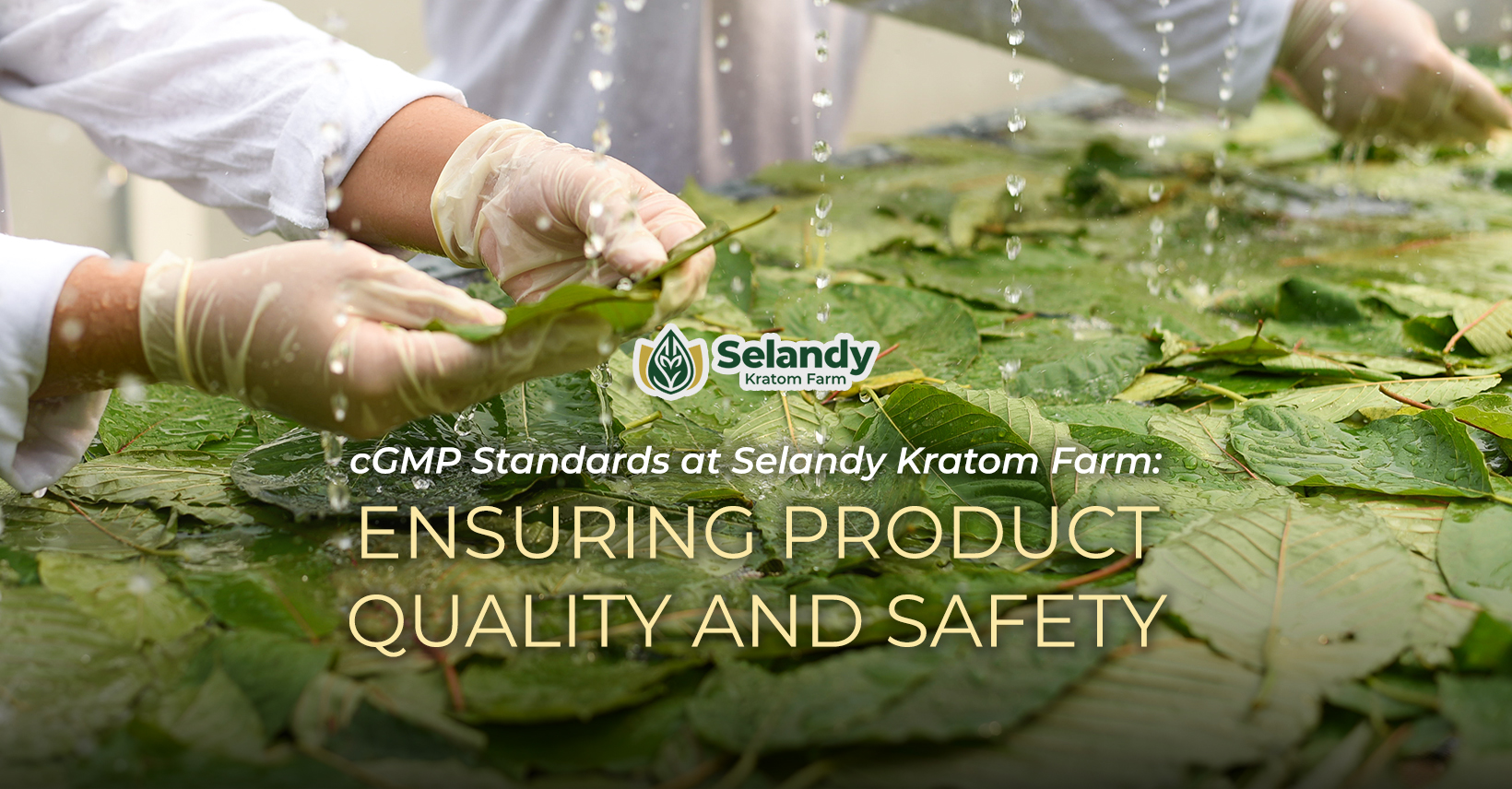
Kratom (Mitragyna speciosa) has gained global popularity due to its potential benefits as an herbal supplement. However, with increasing demand, there is a need to ensure the safety and high quality of kratom products. The implementation of Current Good Manufacturing Practices (cGMP) is a critical step in achieving this goal.
What is cGMP?
cGMP, or Current Good Manufacturing Practice, is a set of regulations enforced by regulatory agencies, such as the FDA in the United States, to ensure that products are consistently produced and controlled according to strict quality standards. cGMP covers all aspects of production, from raw materials, facilities, to packaging and distribution processes.

Implementing cGMP in Kratom Production
- Raw Materials:
- Reliable Sourcing:
Kratom raw materials must be sourced from trusted suppliers who adhere to sustainable agricultural practices and are free from harmful chemicals. - Raw Material Testing:
Each batch of raw materials should be tested to ensure purity, potency, and freedom from contaminants such as heavy metals, pesticides, and microbes.
- Reliable Sourcing:
- Production Facilities:
- Cleanliness and Sanitation:
Production facilities must be maintained with strict sanitation procedures to prevent cross-contamination. - Proper Equipment:
All equipment used must be well-maintained and cleaned regularly to ensure efficient and safe operations.
- Cleanliness and Sanitation:
- Production Process:
- Documentation and Traceability:
Every stage of production must be clearly documented, allowing for traceability in case of quality issues. - Quality Control:
Implementation of quality control procedures at every stage of production, from harvesting kratom leaves to packaging the final product.
- Documentation and Traceability:
- Finished Product Testing:
- Laboratory Testing:
Finished products must undergo a series of laboratory tests to ensure there is no contamination and that the product meets specified specifications. - Quality Certification:
Products that pass testing will receive certification guaranteeing quality and safety for consumers.
- Laboratory Testing:
- Packaging and Storage:
- Safe Packaging:
Kratom products must be packaged in containers that prevent contamination and maintain product freshness. - Proper Storage:
Storage facilities must have proper temperature and humidity controls to prevent product degradation.
- Safe Packaging:
- Employee Training:
- Ongoing Training:
Employees must receive ongoing training on cGMP procedures, safety policies, and proper production techniques. - Compliance and Audits:
Regular internal and external audits should be conducted to ensure compliance with cGMP standards.
- Ongoing Training:

Benefits of Implementing cGMP for Kratom
- Consumer Safety:
Implementing cGMP ensures that kratom products are safe for consumption, free from contamination and harmful substances. - Consistent Quality:
cGMP guarantees that each batch of kratom products has consistent quality, providing confidence to consumers. - Market Credibility:
Adhering to cGMP standards increases the credibility of kratom producers in the eyes of consumers and business partners. - Regulatory Compliance:
Implementing cGMP helps producers comply with national and international regulations, avoiding legal issues and product recalls.
Conclusion
Implementing cGMP standards in kratom production is a crucial step to ensure safe, high-quality, and compliant products. By adhering to cGMP, kratom producers can deliver reliable products to consumers, build market trust, and ensure long-term business sustainability.